

What To Use To Clean An Acoustic Guitar
Fig. i. Changes in temperature and humidity can crusade checking in traditional nitrocellulose lacquer finishes.
When caring for a guitar, your showtime line of defence is to wipe down its neck, strings, and body afterward you play. Only that's simply the kickoff.
So far, we've explored means to clean and condition your guitar with an emphasis on the fretboard, bridge, and hardware ["The Great Guitar Cleanup," December 2022]. Nosotros touched on caring for the stop, but this discipline warrants further word.
Over time, sweat, clay, and oils build up on the guitar's finish and slowly break it down. This causes the finish to develop a hazy film and become discolored. In improver, if your sweat has a loftier acid content (low PH balance), it can really crusade the finish to deteriorate, peculiarly where you lot remainder your arm. Sweat contains water, acids, salt, and several minerals that are corrosive to finishes and hardware. When you add together in environmental issues, such as grit and pollen, it'south no wonder our guitars get so filthy.
A lilliputian background. There are many different types of finishes used on stringed instruments. Vintage instruments typically sport nitrocellulose lacquer—a sparse, hard finish that lets the wood resonate well. But nitro is also prone to checking and cracking over time (Fig. i), especially when the instrument is exposed to sudden temperature and humidity changes. To combat this, many modernistic guitar builders and manufacturers encompass their instruments with finishes that are more than impervious to ecology weather condition. These include urethane, acrylic, polyester, and epoxy formulations. In some cases, the switch from nitro is a way to salvage production costs, but builders can also be motivated by a desire to spray materials that are less harmful to the planet and workers. For example, in recent years there has been a trend toward UV-cured and h2o-based finishes, both of which reduce chemicals released into the atmosphere during production.
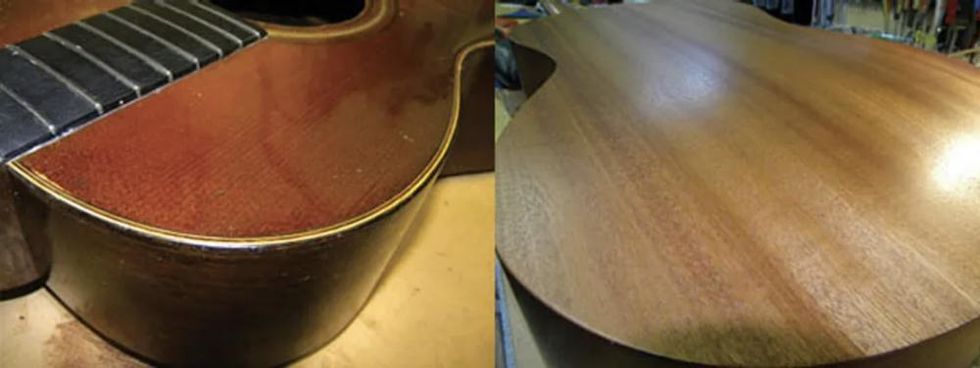
Fig. ii. A gloss finish (left) looks shiny and usually feels smooth and glass-like to the bear upon. Fig. 3. A satin cease (right) has a softer, less reflective sheen, allowing you lot to oft feel the woods grain.
Modern finishes come up in two styles: gloss and satin. Gloss finishes are shiny and take a drinking glass-like look (Fig. ii), while satin finishes have a softer, hazy sheen (Fig. 3) and sometimes can actually experience "unfinished."
Cleaners and polishes. No matter what kind of finish is on your instrument, it's a good idea to keep it clean to prolong its life. There are hundreds of products on the market place that claim to exist the best for cleaning and polishing an instrument. The truth is many of them will cause the finish to slowly deteriorate. These cleaners contain petroleum products and solvents that can damage a nitrocellulose finish, and some polishes contain abrasives that will remove a vintage instrument's natural patina. The best guitar care products won't leave behind residue and exercise not contain solvents or petroleum products.
There's a debate about whether polishing a guitar is more than harmful than helpful. When you shine a guitar, it creates a seal or coating that'southward intended to protect the finish. However, I've found that the event is more cosmetic than functional, and many finishes don't do good from waxing or polishing. Polishes and waxes build up over time and can eventually dampen the sound of your guitar—almost similar wrapping it in a bed sheet.
Only that'due south not all: If your guitar has finish checking, smoothen will build up in the hairline cracks, and this tin can discolor the wood underneath or even cause the finish to chip off. Based on experience, I believe cleaning your guitar is more beneficial than polishing or waxing information technology. Polishing will brand your guitar look meliorate, but actually doesn't benefit the finish other than making information technology shiny. If you lot feel compelled to polish your instrument, look for products that contain pure carnauba wax—it'south the safest for your guitar.
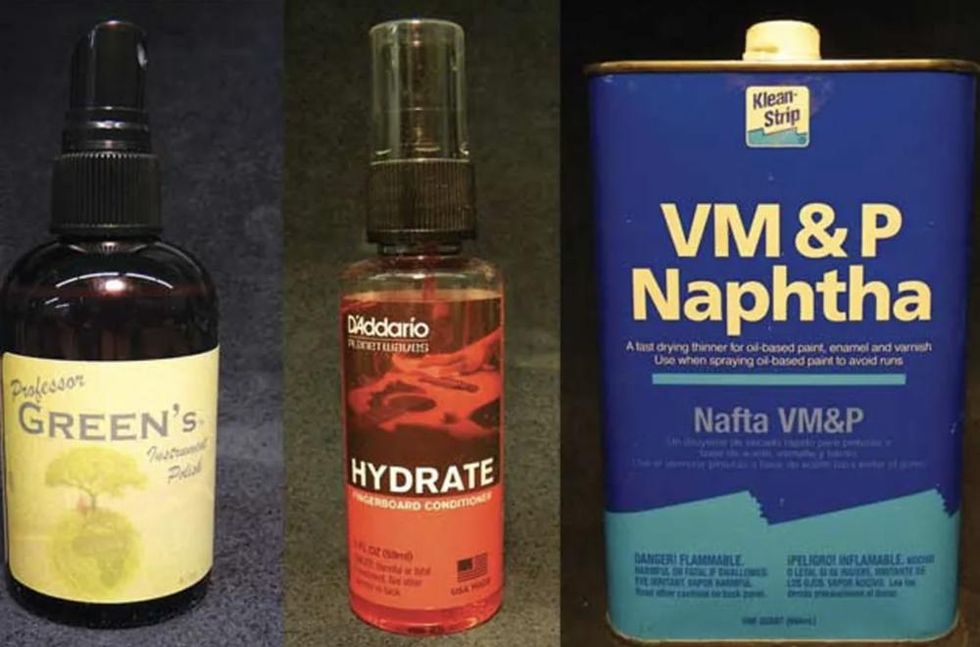
Fig. 4. Professor Light-green'southward Instrument Polish (left) is a water-based "guitar soap" that cleans effectively and leaves no residue. Fig. 5. Planet Waves Hydrate (center) is formulated to condition and clean unfinished fretboards. Fig. 6. Naphtha (right)—the main ingredient in lighter fluid—is rubber and effective for cleaning most finishes and hardware. However, it's toxic and flammable, and so you must carefully follow the manufacturer's directions.
Three products I've found to be both prophylactic and effective for cleaning a guitar'due south finish are Professor Green's Instrument Polish (Fig. iv), Planet Waves Hydrate (Fig. 5), and naphtha (Fig. 6). Though each is radically different, they can all be used with a clammy material.
Here's the breakup: Professor Green's Musical instrument Smoothen is a natural, water-based liquid cleaner with no harsh chemicals. I'd classify it as "guitar soap" rather than a modern polish. It does an excellent job cleaning clay, oil, sweat, and oxidation. Existence h2o based, it's very easy to clean up without leaving any residue.
Planet Waves Hydrate fretboard conditioner is a paraffinic hydrocarbon-based liquid. Effective for removing clay and oils from most any cease and unfinished fretboards, it's non-toxic and not-flammable.
Which is not the case for naphtha—essentially lighter fluid. It is a gentle and loftier-flash solvent that's safe for nearly finishes. (Naphtha-saturated Q-tips do a great job cleaning rusty saddles and bridge hardware.) Even so, naphtha fumes and liquid are toxic to humans, so if yous utilise information technology, I recommend wearing a mask and gloves. It'due south highly flammable, then avert open up flames!
No matter what brand or type of cleaner yous choose, always avoid those that incorporate silicone, heavy waxes, lacquer thinner, bleach, etc. Household piece of furniture polish and all-purpose cleaners—such every bit Pino Sol, Windex, and 409—volition too impairment your terminate. The just household product that'southward safety to use to make clean your guitar is white distilled vinegar. Information technology will clean the finish, but practice you really want a guitar that smells similar a pickle?
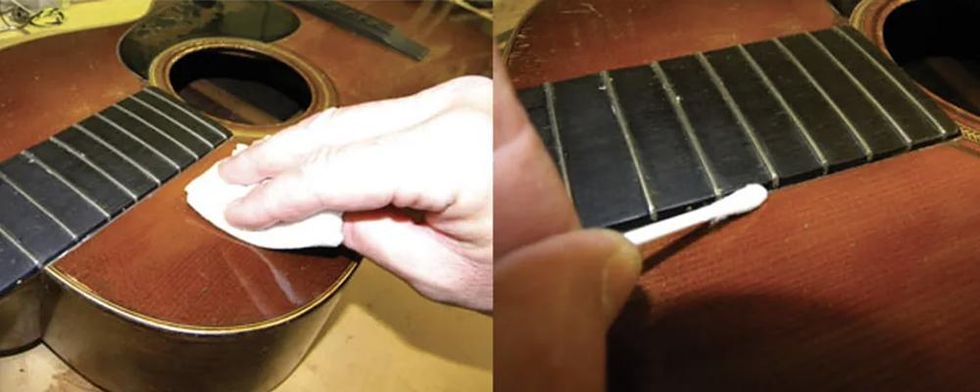
Fig. vii. A damp paper towel (left) or microfiber textile works well to clean a guitar's end. Fig. 8. Utilize a Q-tip (correct) to clean hard-to-achieve nooks and crannies.
Cleaning the finish. When cleaning your guitar, I recommend using a damp newspaper towel or microfiber fabric. Spray or dab a little cleaner on the towel and gently wipe away the dirt (Fig. 7). Avoid saturating your guitar with water. It's okay to use a lightly damp cloth, just don't waterlog it. Use a Q-tip for those difficult-to-reach areas (Fig. viii). Once the guitar is clean, go over it once again with a clean, damp cloth. That'due south it—quick and simple.
Polishing a gloss finish. If in that location are a lot of lite scratches and swirl marks in a gloss finish, you need to decide if it's worth buffing them out. This actually depends on how old the guitar is and what type of finish it has. If information technology's a fairly new guitar, it'southward okay to use a gentle buffing compound, such as Meguiar's M85 Mirror Glaze or Planet Waves Restore (Fig. ix), with a microfiber fabric to remove these marks. Continue in listen that every fourth dimension you lot use whatsoever chemical compound to vitrify out a finish, yous are removing finish, then use shine sparingly and with great discretion.
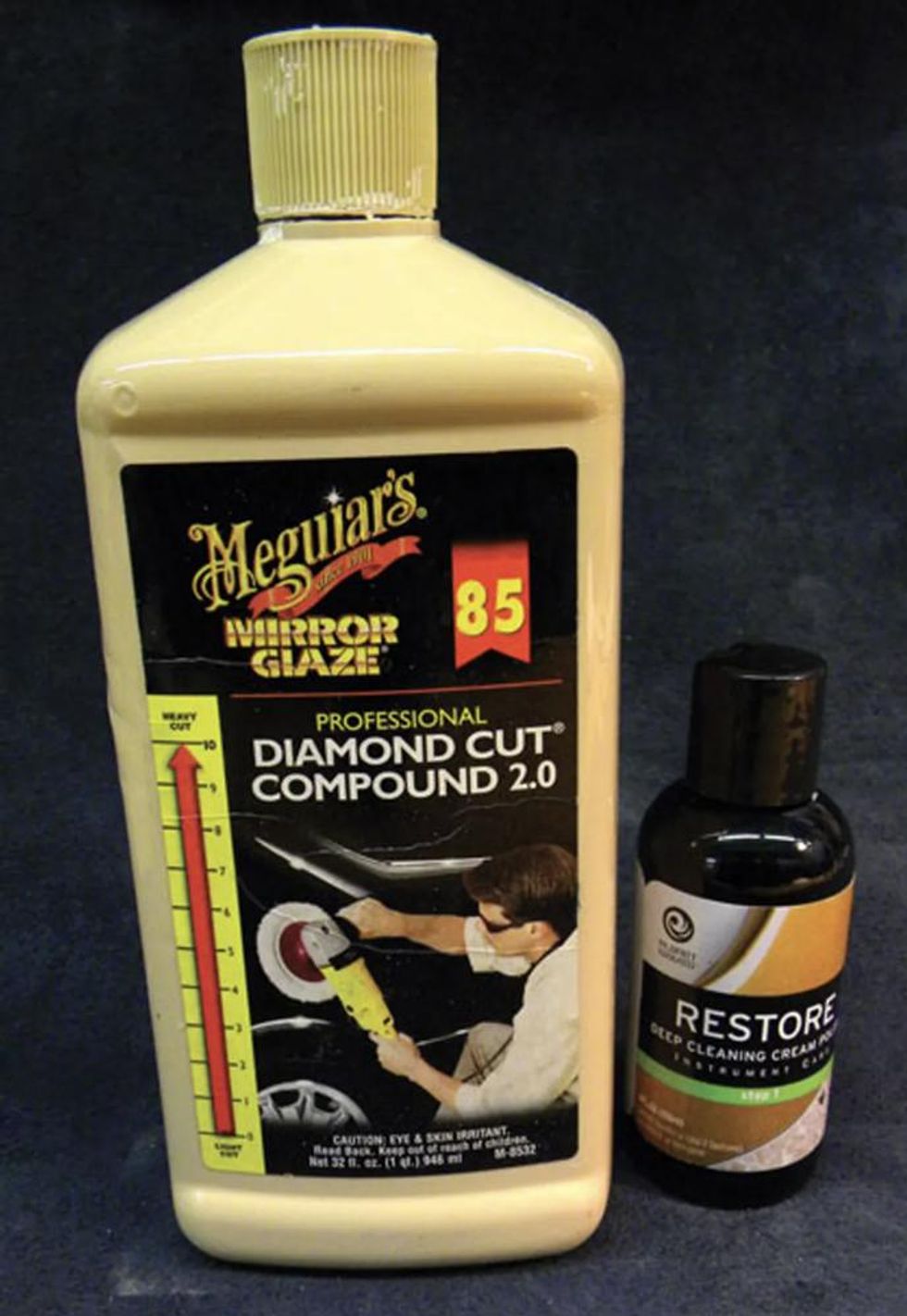
Fig. nine. Buffing compounds tin remove swirl marks and light scratches in a gloss cease,
but you should never buff or polish a satin finish.
Please note: If your guitar has a satin end, never buff or smoothen it. Cleaning is fine, but buffing and polishing a satin finish will go far wait blotchy.
Another cautionary note: If you have a vintage instrument with a nitro stop, be enlightened that as a normal part of the aging procedure, nigh nitro finishes will change color and develop a sheen or patina. When cleaning a vintage guitar, go easy—y'all simply want to remove the clay, oils, and sweat. The underlying patina adds to the instrument's value, and removing it to brand the finish shiny and pretty will devalue your guitar.
[Updated 7/25/21]

Source: https://www.premierguitar.com/pro-advice/how-to-clean-a-guitar
Posted by: stewarttorcer.blogspot.com
0 Response to "What To Use To Clean An Acoustic Guitar"
Post a Comment